
We are performing an increasing number of everyday activities on our computers and smartphones — and one aspect of our lives that is rapidly yielding to the digital revolution is the way that we access physical spaces.

comment 0
We are performing an increasing number of everyday activities on our computers and smartphones — and one aspect of our lives that is rapidly yielding to the digital revolution is the way that we access physical spaces.
At Klevio, we’re keen to be as transparent as possible about the people behind our product, because it is their vision, passion and creativity that imbues everything we do. As we prepare for our commercial launch, we thought we’d take the opportunity to give you a potted history of the story so far…
Founded by three experienced business leaders and serial entrepreneurs, the team behind Klevio have been at the forefront of the smart-home technology revolution for several years. The company is the result of a merging of two products — Sherlock (a keyless entry system which lets you open your doors with your phone) and CubeSensors (a connected device that monitors rooms).

Head of Operations Mark (left) and Co-founder Demetrios (right)

Co-founder Aleš Špetič
Then in 2016, Demetrios, with his knowledge of the home access market, and Aleš and Marko, with their expertise in hardware development, joined forces to form Klevio with the aim of taking home access to the next level of innovation.
And that’s the story so far. But really, it’s just the beginning…
Want to know about the rest of the Klevio team? We’l be posting snapshot bios of every staff member, telling you about their day-to-day role, how they like to spend their spare time, and poking a bit of fun at them too. Don’t worry, they’ve got broad shoulders…

Co-founder Marko (left) and Head of Marketing Urška (right). Matjaž, Manufacturing and Ljubljana office manager, photo-bombing in the background.
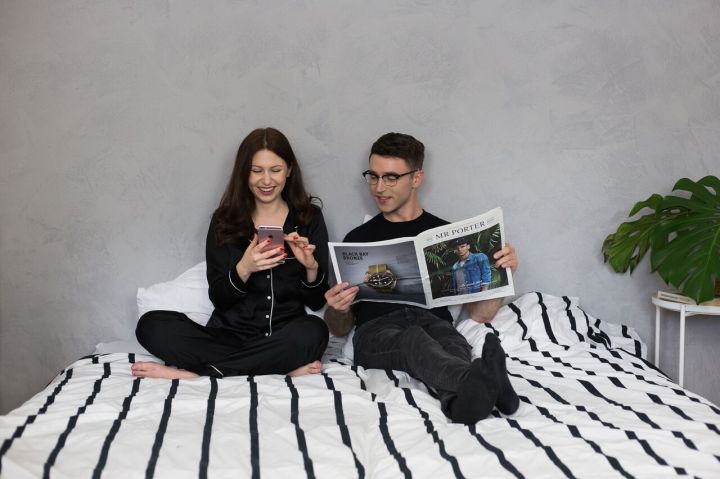
At Klevio we work on the principle that there’s no substitute for talking with our users. Simply put, no amount of in-house road-mapping or brainstorming sessions can match hearing about the first-hand experiences of the people who use our product on a daily basis.
Let’s not be bashful — at Klevio we like to think of ourselves as pioneers. But we’re also well aware that we’re following in a long and distinguished line of innovators who have helped change our day-to-day lives for the better.
So we thought it would be fun to take a look back at some of the smartest and most popular home product inventions of all time, each one so commonplace today that it’s a mystery how we ever got by without it.
Without further ado, here are our top five life hacks that have propelled themselves into our domestic lives down the years:
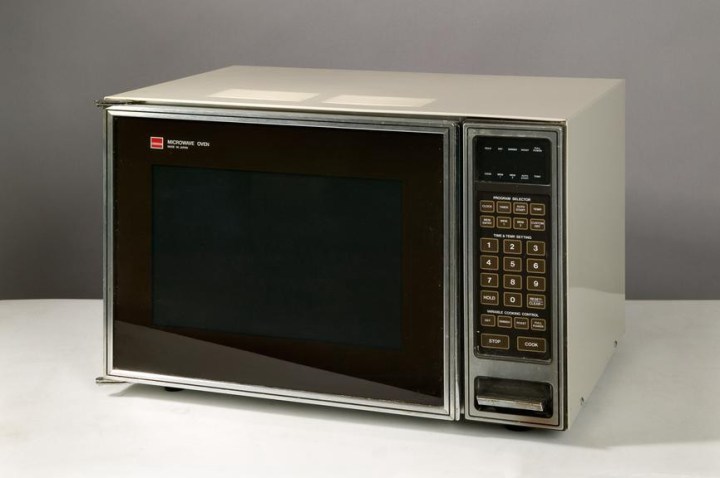
Whisper it quietly but prior to the advent of the microwave, people had to wait — yes wait — to re-heat or cook their food. But it was only thanks to a quirk of fate that the food-heating powers of electromagnetic radiation were ever discovered.
The story begins with a gentleman by the name of Percy Spencer who worked as a physicist for American defence technology giants Raytheon during WWII. Sometime around the end of the war, Spencer was busy at work building magnetrons while standing in front of an active radar set when he noticed that the chocolate bar tucked away in his pocket had begun to melt.
Being an inquisitive sort, Spencer began investigating if he could create the same effect on other food stuffs. Within a couple of years the device had been patented and the microwave was on its way to becoming an essential piece of equipment for kitchens across the developed world.
Those of us of a certain age have all been there, grimly emptying our vacuum cleaner at regular intervals after the build-up of dust and dirt had reduced its suction to a pathetic whimper. Until, that is, James Dyson came along with his miraculous bagless version that took households by storm in the mid-1980s.
Not that it was a smooth journey — Duson created an incredible 5,127 prototypes before he landed on one that was viable for commercial launch. The cream always rises to the top, however, and in 1986 he patented a technique called cyclonic separation that divided particles from the air using centrifugal force.
His first cleaner to feature this technology, the G-Force, was bright pink, expensive at €1677 and only available through catalogues in Japan. His second product to market, the Dyson DC01, promising 100% suction 100% of the time, was made available for sale in the UK and rapidly became the highest selling vacuum cleaner on the market.
The early personal computers of the 1980s and 90s were true game changers in the way that we stored information. But those nascent versions had limitations that today seem unthinkable. Cast your eye over the desk of your average computer owner during those early years and it would more than likely have been strewn with a floppy discs. Then along came the Flash Drive — which became manna from heaven for neat freaks everywhere. What’s more, for the first time they offered the potential for portability that would allow you to transfer information from machine to machine.
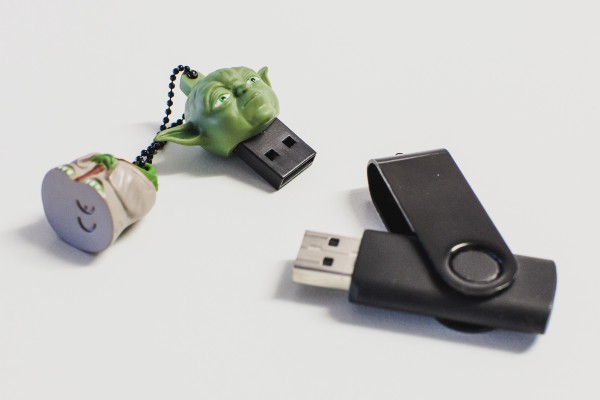
The core technology was the brainchild of Toshiba engineer Fujio Masuoka, who coined the name Flash Drive from the way erasing information reminded him of the speed of a camera flash. However, his idea had no way of docking with computers and it was down to Ajay Bhatt, a developer at Intel, to create the USB.
It was still another few years, though, until the first USB stick was invented and made available in 2000 with a hefty — at the time — storage capacity of 8 Megabytes.
Don’t be fooled by their simplicity — post-it notes have become an indispensable item for many. In fact, one of our team at Klevio has never knowingly spent a day at work without applying several to a wall (sometimes she even writes on them)…

The unique glue with low tack re-adhesive properties was invented in 1968 by a man called Spencer Silver when he was actually trying to develop extra strong glue. For the next five years he tried his hardest to spread the word, but the idea just wouldn’t take off. Then a friend suggested using it to mark a hymn book and it proved a turning point for the humble post-it.
Companies finally saw the potential and they first went on sale in 1977. Today anyone of an organised disposition is almost certain to have several packs tucked away in various drawers around their home.
Granted, they won’t be found in many people’s homes, but the fruits of their labour certainly will . In 1928, American inventor Otto Frederick Rohwedder cut his first loaf in his bread slicing machine at the Chillicothe Baking Company in Missouri. It was an instant hit and before long pre-sliced loafs were being made available in stores and supermarkets across the world, making the arduous task of cutting your own bread at home virtually obsolete.
As for the famous phrase, by sheer coincidence this is thought to have originated in the early 1960s, also in Missouri, when a lady wrote a letter to a local newspaper, describing one of the paper’s regular columns as “about the greatest thing since sliced bread”. The rest, as they say, is history.
What are your favourite home products (apart from Klevio, of course) that you couldn’t imagine life without? Let us know by emailing us at hello@klevio.com.
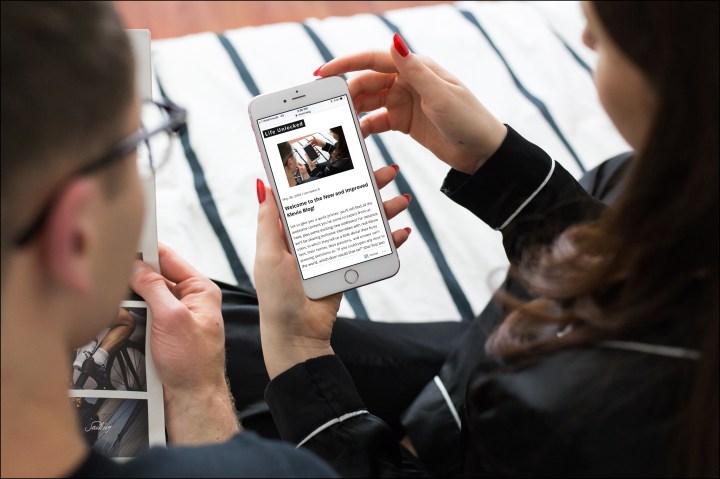
Let us give you a quick primer: you’ll still find all the awesome content you’ve come to expect from us here, plus some exciting new additions! For instance, we’ll be sharing exclusive interviews with real Klevio users, in which they tell us a little about their busy lives, their homes, their passions, and answer such pressing questions as: “If you could open any door in the world, which door would that be?” (Our first two profiles have amazing answers to that question, so make sure you check them out!)
 Life Unlocked